


Introduction
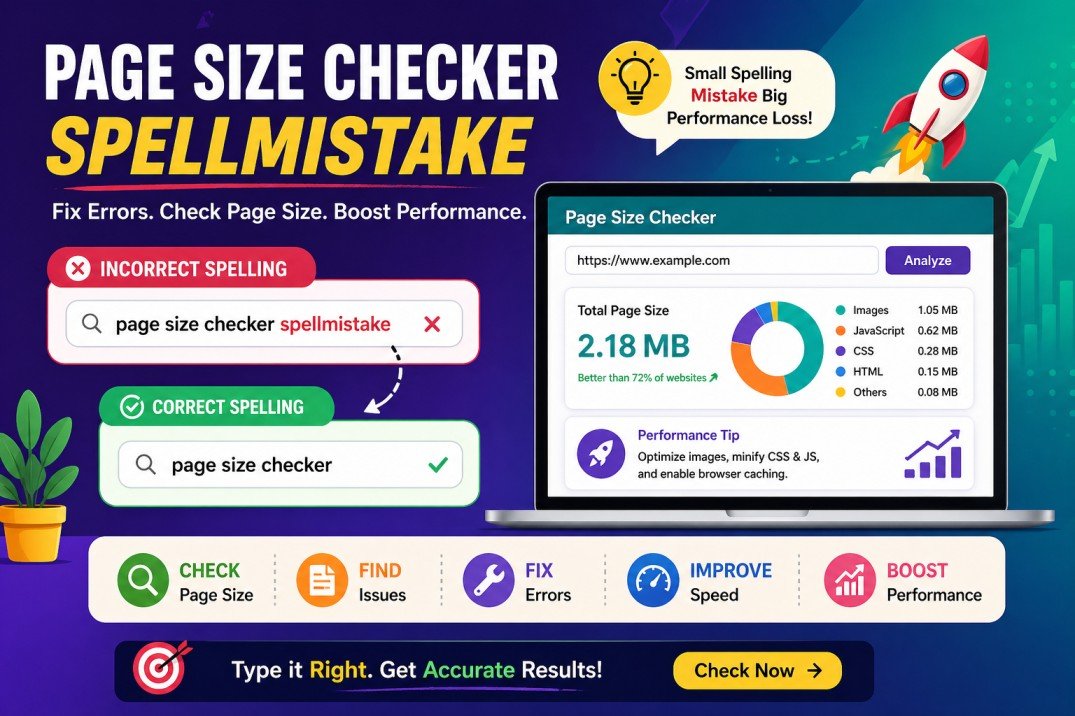
If you’ve ever searched for tools to measure website performance, you might have come across the phrase page size checker spellmistake. At first glance, it looks like a simple typing error—but it actually reveals a common issue many users face when searching for technical tools online. Small spelling mistakes can lead to confusion, missed resources, and even incorrect optimization practices. Understanding this concept is more important than it seems, especially if you want your website to load faster and perform better.
Table of Contents
Understanding Page Size and Why It Matters
Page size refers to the total weight of a webpage, including images, scripts, stylesheets, and other elements. A heavier page takes longer to load, which can frustrate users and increase bounce rates. Many developers rely on page size checker tools to analyze how large their pages are and where improvements can be made.
However, when users search with a page size checker spellmistake, they may end up using the wrong tools or missing the most reliable ones. This highlights how even a small error can affect your ability to optimize your site effectively.
The Impact of Spelling Errors in Technical Searches
Spelling errors are surprisingly common, especially when dealing with technical terms. Words like “checker,” “analyzer,” or “performance” are often mistyped. The term page size checker spellmistake itself reflects how users may unknowingly search with incorrect phrasing.
This can lead to several problems. You might land on low-quality websites that are not trustworthy. You could also miss out on advanced tools that provide accurate data. Over time, this affects your understanding of website performance and limits your ability to make meaningful improvements.
How Page Size Affects User Experience
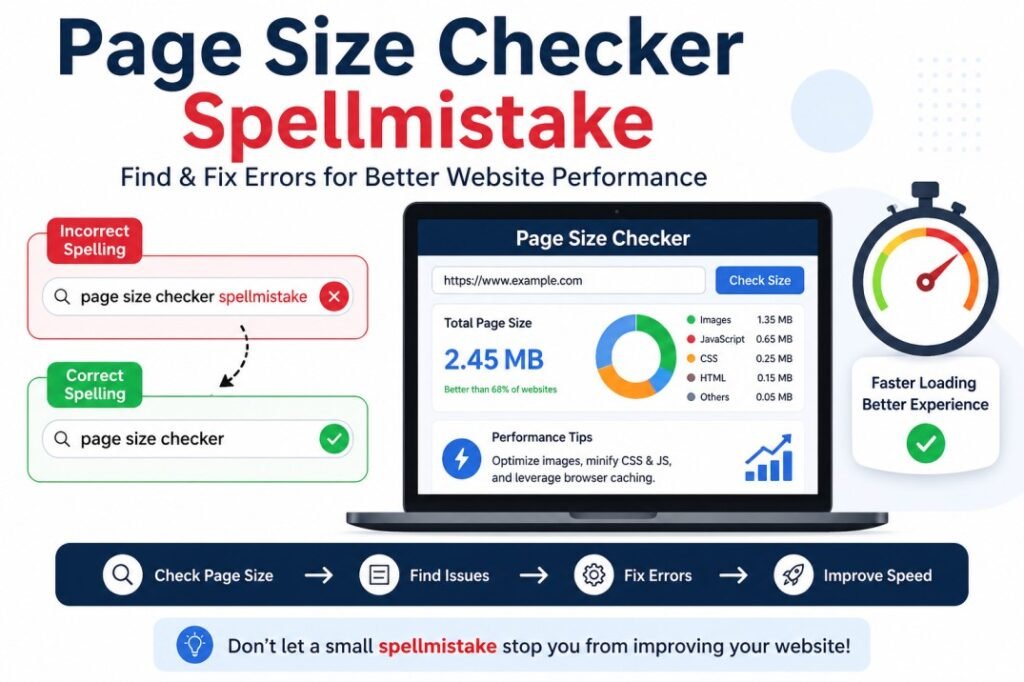
A website’s speed is one of the most critical factors in user satisfaction. When a page takes too long to load, visitors often leave before it fully appears. This not only impacts engagement but also reduces conversions.
Using a reliable tool instead of relying on results from a page size checker spellmistake search ensures you get accurate insights. A properly optimized page should load quickly, display smoothly, and provide a seamless experience across devices. These factors are essential for building trust with your audience.
Common Causes of Large Page Sizes
Many websites struggle with large page sizes due to unoptimized images, excessive scripts, and poorly structured code. High-resolution images, while visually appealing, can significantly increase load times if not compressed properly.
Another common issue is the use of too many plugins or third-party scripts. These elements add functionality but also increase the overall size of the page. When users search with a page size checker spellmistake, they might not find the right guidance to identify these issues.
How to Use Page Size Checker Tools Correctly
Using a page size checker tool is straightforward, but it requires accuracy in your search and approach. Start by entering the correct term in your search query to find trusted tools. Once you access a reliable checker, simply input your website URL and analyze the results.
The tool will show you the total page size, loading time, and a breakdown of each element. This information helps you identify which parts of your site need improvement. Avoid relying on results from a page size checker spellmistake search, as they may not lead you to the most accurate tools.
Improving Website Performance Through Optimization
Optimizing your website is not just about reducing page size—it’s about creating a better overall experience. Compressing images, minimizing code, and using efficient hosting solutions can significantly improve performance.
Another effective strategy is enabling browser caching. This allows returning visitors to load your site faster by storing certain elements locally. By focusing on these improvements, you can ensure your site performs well regardless of how users initially search for tools, even if they start with a page size checker spellmistake.
The Role of Accurate Information in Website Optimization
Accurate information is the foundation of effective optimization. When you rely on correct data and trusted tools, you can make informed decisions that improve your website’s performance.
A simple mistake like typing page size checker spellmistake instead of the correct term can lead to confusion and wasted time. This emphasizes the importance of double-checking your search queries and ensuring you are using reliable sources.
Why Attention to Detail Matters
In the digital world, small details can have a big impact. A single spelling error can change the results you get and affect your entire workflow. This is especially true when working with technical tools and performance metrics.
By paying attention to detail, you can avoid the pitfalls associated with a page size checker spellmistake and ensure you are always working with accurate information. This not only improves your efficiency but also enhances the quality of your work.
FAQs
What is a page size checker?
A page size checker is a tool that measures the total size of a webpage, including all its elements, to help identify performance issues.
Why is page size important for websites?
Page size affects loading speed, user experience, and overall performance. Smaller pages load faster and keep users engaged.
How can a spelling mistake affect my search results?
A spelling mistake like page size checker spellmistake can lead to irrelevant or low-quality results, making it harder to find reliable tools.
What are the best ways to reduce page size?
Optimizing images, minimizing code, and reducing unnecessary scripts are some of the most effective methods.
Can beginners use page size checker tools easily?
Yes, most tools are user-friendly and require only a website URL to provide detailed performance insights.
Read More Articles: Lora Chaffins
Conclusion
The term page size checker spellmistake might seem trivial, but it highlights an important aspect of digital work—accuracy. From finding the right tools to analyzing your website’s performance, every step requires attention to detail. By understanding the importance of correct searches and reliable data, you can optimize your website more effectively and provide a better experience for your users.
In the end, success in website optimization comes down to consistency, accuracy, and a willingness to learn. Avoiding simple mistakes like spelling errors can make a significant difference in your results and help you achieve long-term success.
