


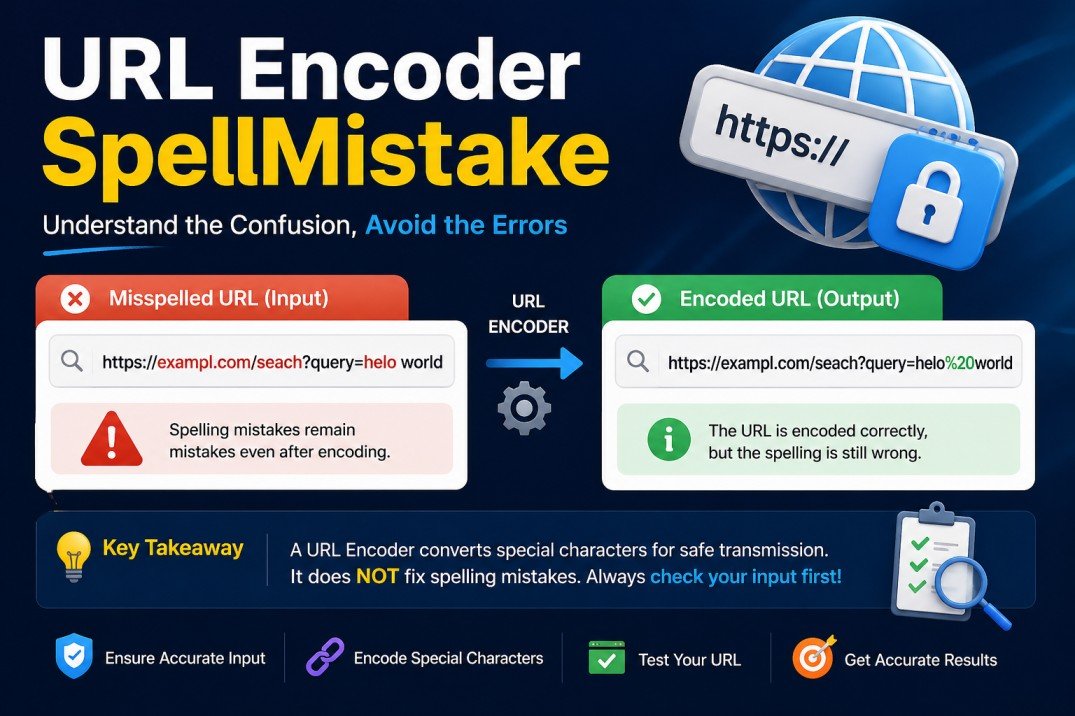
URL Encoder SpellMistake is a phrase that often appears in search queries, yet it is not a formal technical term. Many people encounter it while working with URLs, encoding tools, or web-related tasks and assume it refers to a specific feature or tool. In reality, it reflects a common misunderstanding that blends URL encoding with simple spelling errors. Understanding what this phrase implies can help you avoid mistakes and use web tools more effectively.
Table of Contents
What URL Encoding Really Means
A URL encoder is a utility used to convert characters into a format that can be safely transmitted over the internet. Certain characters, such as spaces, symbols, and reserved signs, cannot be directly used in URLs. Encoding replaces them with a percent-based format so browsers and servers can interpret them correctly.
For instance, a space in a URL becomes “%20.” This transformation ensures that data is transmitted without errors or misinterpretation. Encoding is widely used in web development, APIs, and even everyday browsing when you search for something online.
The concept is simple, but it plays a crucial role in ensuring that links function properly. Without encoding, many URLs would break or behave unpredictably.
Why “SpellMistake” Gets Attached to It
The addition of “SpellMistake” to URL encoding usually comes from user confusion rather than technical design. People often type queries quickly or misunderstand what a tool does. As a result, phrases like URL Encoder SpellMistake emerge.
In most cases, this phrase refers to one of two situations. The first is a typing error when searching for a tool. Someone may have intended to search for a URL encoder but accidentally included the term “spell mistake.” The second situation involves incorrectly spelled words inside a URL that are then encoded correctly but still produce the wrong outcome.
Encoding does not fix spelling. It only converts characters into a compatible format. This distinction is essential for anyone working with URLs.
How Spelling Errors Affect Encoded URLs
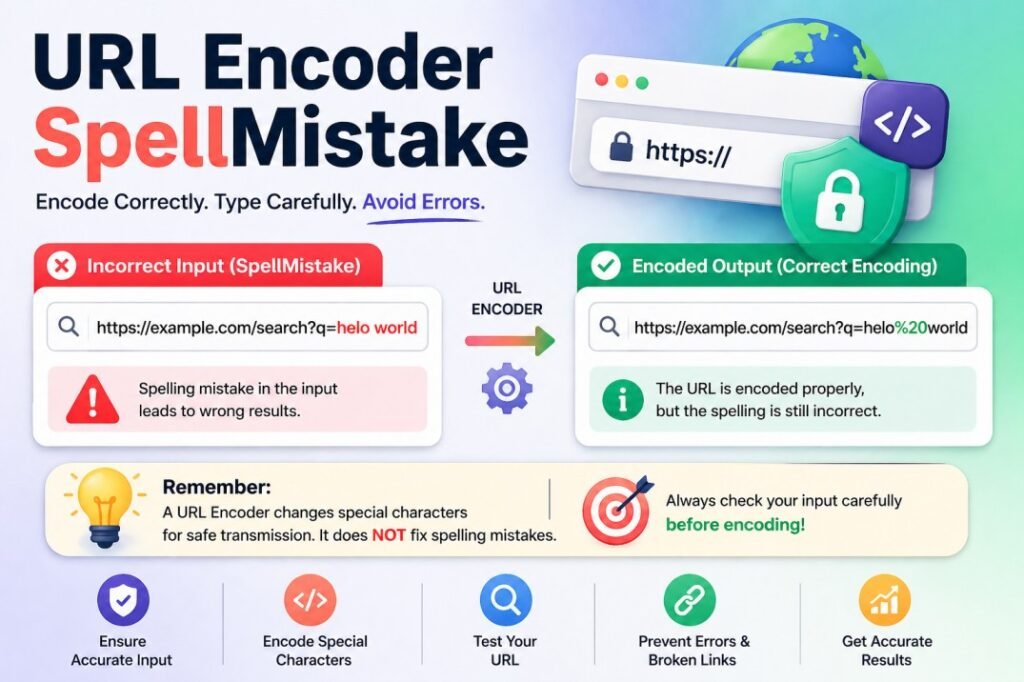
A spelling error in a URL remains a spelling error, even after encoding. The encoding process does not validate or correct the text. It simply transforms it.
Imagine entering a search query with a typo. The system encodes the query perfectly, but the results may not match what you intended because the original word was incorrect. This is where the idea behind URL Encoder SpellMistake becomes more practical.
Even though the encoding is technically accurate, the output is still flawed due to the original input. This can lead to broken links, incorrect search results, or failed API requests.
Common Situations Where This Confusion Happens
This misunderstanding often appears in everyday scenarios. When people manually create URLs, especially for search queries or tracking links, they may include spelling mistakes without realizing it. The encoded result looks complex and technical, which can make it harder to spot the original error.
Another situation occurs in web development. Beginners sometimes assume that encoding tools will “fix” everything in a URL, including grammar or spelling. When the output does not behave as expected, they may search for terms like URL Encoder SpellMistake, thinking there is a special feature they are missing.
In reality, the issue is much simpler and lies in the input rather than the encoding process.
The Difference Between Encoding and Correction
It is important to separate two completely different functions. Encoding is about formatting data for safe transmission. Spell checking is about correcting language errors. These are handled by entirely different tools.
A URL encoder focuses on technical compatibility. A spell checker focuses on linguistic accuracy. When these roles are mixed up, confusion arises.
Understanding this difference helps prevent mistakes and ensures that you use the right tool for the right task. It also explains why the term URL Encoder SpellMistake does not exist as a standard concept.
Best Practices to Avoid Mistakes
When working with URLs, the most effective approach is to ensure that your input is accurate before encoding it. Double-check spelling, confirm that keywords are correct, and verify that the structure of the URL matches your intent.
Taking a few extra seconds to review your text can save a lot of time later. It reduces the risk of broken links and improves the overall reliability of your work.
Another helpful practice is to test your URLs after encoding them. Open them in a browser or run them through your system to see if they behave as expected. If something seems off, revisit the original text rather than assuming the encoding process is at fault.
Why This Topic Matters
At first glance, URL Encoder SpellMistake might seem like a minor or trivial issue. However, it highlights a broader challenge in working with web technologies. Small misunderstandings can lead to confusion, wasted time, and unexpected errors.
For developers, marketers, and everyday users, clarity is essential. Knowing what each tool does and what it does not do helps you work more efficiently and confidently.
This topic also reflects how people search for solutions. When something goes wrong, users often create their own terms to describe the problem. While these terms may not be technically accurate, they provide insight into common pain points.
Real-World Impact of Incorrect URLs
Incorrectly spelled URLs can have real consequences. In marketing campaigns, a typo in a link can lead to lost traffic or reduced engagement. In web development, it can cause failed requests or incorrect data retrieval.
Even in simple browsing, a small mistake can lead you to the wrong page or prevent a link from working altogether. These issues may seem minor individually, but they can add up over time.
By understanding the role of encoding and recognizing the limits of what it can do, you can avoid these problems and create more reliable links.
Clarifying the Meaning of URL Encoder SpellMistake
The phrase URL Encoder SpellMistake is best understood as a reflection of user confusion rather than a defined feature. It combines two unrelated ideas and creates the impression of a tool or function that does not actually exist.
Recognizing this helps you approach the problem more logically. Instead of searching for a special tool, you can focus on correcting the input and using encoding appropriately.
This simple shift in perspective can make a big difference in how you handle URLs and troubleshoot issues.
Read More Articles: Sitemap Generator by SpellMistake
FAQs
What does URL Encoder SpellMistake mean?
It is not an official term. It usually refers to confusion between URL encoding and spelling errors in a URL.
Can a URL encoder fix spelling mistakes?
No, a URL encoder only converts characters into a compatible format. It does not correct language errors.
Why do people search for URL Encoder SpellMistake?
People often misunderstand how encoding works or encounter issues caused by typos, leading them to search for this phrase.
How can I avoid errors in encoded URLs?
Check your spelling and input carefully before encoding. Testing the final URL can also help identify issues.
Is URL encoding necessary for all URLs?
It is necessary when a URL contains special characters or spaces that need to be converted into a safe format for transmission.
Conclusion
URL Encoder SpellMistake is not a real technical term, but it represents a common misunderstanding about how URL encoding works. Encoding ensures that characters are transmitted correctly, but it does not fix spelling errors or improve the meaning of the text.
By separating these concepts and paying attention to the accuracy of your input, you can avoid unnecessary confusion and create better, more reliable URLs. Whether you are a beginner or an experienced user, this understanding will help you work more effectively and avoid common pitfalls.
